
How to Care for Your Professional Uniform and Preserve Its Refined Appearance
How to Care for Your Professional Uniform and Preserve Its Refined Appearance
A beautifully made professional uniform deserves thoughtful care.
The way a garment is washed, dried and stored can influence its appearance just as much as the quality of its fabric and construction. Even a carefully made uniform can develop pulled threads, surface damage or loss of shape when it is washed together with unsuitable garments or exposed to excessive heat.
With the right care routine, you can help preserve the colour, smooth finish and refined professional presence of your uniform for longer.
Always Begin with the Care Label
Before washing a professional uniform for the first time, read the care label attached to the garment.
Different fabrics, colours and design details may require slightly different treatment. The care label provides the most appropriate instructions for the specific material used in your uniform.
When the general advice in this guide differs from the garment label, always follow the individual care instructions supplied with your uniform.
Wash Professional Uniforms Separately
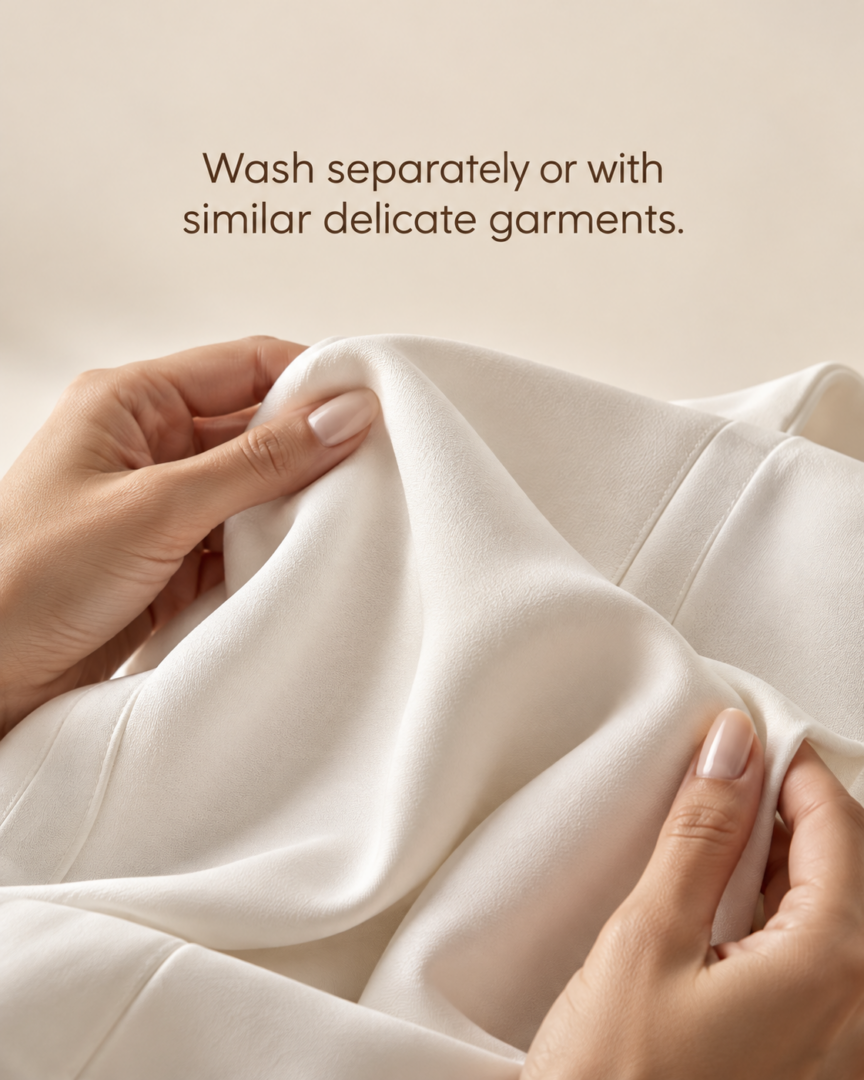
One of the simplest ways to protect a professional uniform is to wash it separately or together with garments made from similarly smooth fabrics.
Avoid washing it with:
• Towels and other rough textiles
• Denim
• Heavy outerwear
• Garments with exposed metal zips
• Clothing with Velcro fastenings
• Items with hooks, buckles or sharp decorative elements
During the washing cycle, Velcro, zipper teeth, hooks and other hardware can catch the surface of the fabric. This may pull individual threads and affect the smooth, refined finish of the garment.
If separate washing is not possible, place the uniform inside a suitable laundry bag and make sure that all zips, hooks and Velcro fastenings on the other garments are completely closed.
Wash at a Gentle Temperature
For most professional uniforms, washing at 30°C is sufficient for regular maintenance.
A lower washing temperature helps protect the colour, fibres and elasticity of the fabric while still providing effective everyday cleaning when combined with an appropriate detergent.
Choose a gentle or easy-care washing programme and avoid overloading the machine. The garments need enough space to move freely during the cycle without excessive friction.
Use a Mild Detergent
Choose a mild detergent suitable for coloured or delicate synthetic fabrics.
Strong detergents and bleaching agents may affect the colour and surface of the material. Chlorine bleach should be avoided unless the care label specifically permits its use.
Apply stain-removal products carefully and test them on a discreet area before treating a visible part of the garment. Avoid vigorous rubbing, as this can alter the surface of the fabric.
Use fabric softener only when it is permitted by the care label. Excessive softener may affect the performance and elasticity of some stretch fabrics.
Turn the Garment Inside Out
Turning the uniform inside out before washing helps reduce direct friction against its visible surface.
It can also help protect:
• Contrast piping
• Decorative topstitching
• Embroidery
• Buttons and rings
• Delicate collar details
• The outer surface of the fabric
Fasten removable or adjustable elements according to the individual garment instructions. If the design has a detachable belt, washing it in a laundry bag can help prevent twisting and tangling.
Pay Special Attention to Embroidered Uniforms
Personalised embroidery adds a distinctive and professional finish, but it also deserves appropriate care.
Turn embroidered garments inside out and avoid washing them with rough fabrics or exposed hardware. Do not rub or brush the embroidered area.
When ironing is required, iron the embroidery from the reverse side at a low temperature or place a clean cloth between the iron and the garment.
Avoid placing a hot iron directly over embroidery, printed logos, buttons, rings or other decorative elements.
Protect the Performance of Stretch Fabrics
Many Visible Style uniforms are made from fabrics containing elastane to support movement and comfort throughout the working day.
For example, selected designs are now available in our new fabric composition:
88% polyester
12% elastane
Stretch fabrics should be protected from excessive heat. High washing temperatures, hot tumble drying and very hot ironing may gradually affect the elasticity of the fibres.
A well-designed stretch uniform still needs an appropriate fit. The garment should allow comfortable movement without being under constant tension across the shoulders, bust, waist or hips.
Air Dry Whenever Possible
After washing, reshape the garment gently and allow it to air dry.
Hang the tunic on a suitable hanger and position the trousers carefully so that they can dry without unnecessary creasing. Avoid leaving the garment tightly folded while it is still damp.
Do not place it directly on a radiator or another strong heat source. Excessive heat can influence the structure, elasticity and appearance of the fabric.
If tumble drying is permitted by the individual care label, select the lowest appropriate temperature.
Iron Carefully at a Low Temperature
Many professional fabrics require little ironing when they are removed promptly from the washing machine, reshaped and air dried correctly.
If ironing is necessary:
• Use a low temperature
• Turn the garment inside out
• Avoid direct contact with embroidery and decorative details
• Use a protective pressing cloth when needed
• Do not leave the iron resting in one place
A garment steamer may also be suitable, but it should not be held too close to the fabric. Always test the temperature on an inconspicuous area first.
Store the Uniform Properly
A clean uniform should be stored in a dry, well-ventilated space.
Tunic tops and dresses are best kept on appropriately shaped hangers that support the shoulders without stretching them. Trousers may be folded neatly or hung from the waistband.
Avoid overcrowding the wardrobe. Giving the garments sufficient space helps preserve their silhouette and prevents unnecessary creasing.
Do not store a professional uniform while it is damp, and avoid prolonged exposure to strong direct sunlight, as this may affect the colour over time.
Rotate Your Professional Wardrobe
If you wear a uniform every day, having more than one set allows each garment time to rest between washing and wearing.
Rotation reduces the frequency with which an individual set must be washed and gives the fabric time to recover its shape. It also ensures that you always have a clean, well-presented uniform available for the next working day.
For professional teams, providing sufficient sets for each employee can support both hygiene and a consistently polished appearance.
What to Do If You Notice a Pulled Thread
If you discover a pulled thread, do not cut it immediately and do not pull it further.
Gently move the surrounding fabric to see whether the thread can settle back into place. For a more noticeable pull, consult a professional tailor or contact the manufacturer for advice.
Cutting a pulled thread without examining the construction may weaken the fabric or allow the affected area to become more visible.
Thoughtful Care Protects Your Professional Image
A professional uniform becomes part of the experience you create for every client.
Correct washing, careful drying and appropriate storage help preserve not only the garment but also the polished image it represents.
At Visible Style, our uniforms are made to order with attention to proportion, construction and finishing. Caring for each garment thoughtfully allows these details to remain visible throughout its working life.
Explore the Visible Style collection at https://visiblestyle.shop/ and discover professional uniforms designed for spa, beauty, wellness and aesthetic environments.